


Over the decades, Africa’s insurance sector might have geared up to counter several natural and man-made calamities. However, nothing could have prepared it for the locust attack which has overwhelmed the Horn of Africa this year with its sheer magnitude. As far as Africa is concerned, COVID 19 is not the only disaster striking in 2020. The unprecedented locust invasion is proving to be far more catastrophic, and worse still, is likely to cause a famine over the forthcoming months.
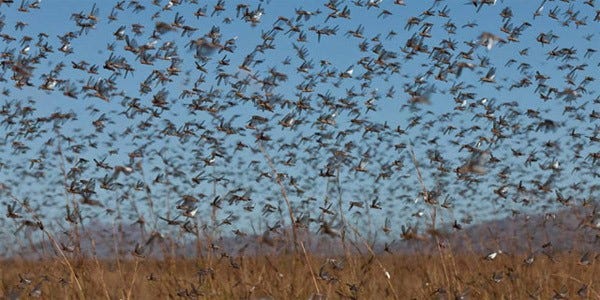
For a farmer, one of the worst possible nightmares entail watching helplessly as his harvest is devoured by a swarm of pests. While locust invasion is not exactly unheard of, what has caught everyone’s attention this year is its enormity. As per UN statistics, this year’s outbreak is the worst of its kind in 25 years that countries like Somalia and Ethiopia have witnessed. Likewise, Kenya has not seen anything like it over the last 70 years, and hence is reeling from the impact.
Dreary that these numbers might be, they raise the pertinent question — what should be done to trigger recovery? Given the extent of damage, various sectors of the economy will have to work in tandem. To this effect, Africa’s insurance sector can play a crucial role in helping farmers recover from their losses and start all over again.
Locust Invasion — Why Is It A Cause of Worry?
But why is a locust invasion causing so much worry? Reasons, why it is being viewed with trepidation, are –
Shortage of Food — As a member of the grasshopper family, each locust weighs around 2 grams, and is capable of eating the same quantity of food. Considering that a single swarm consists of about 40–80 million adult locusts, its food consumption is same as the quantity eaten by 35,000 people. So, all it takes is a few hours for single locust swarm to devour an entire field of crops which represents the livelihood of the farmer.
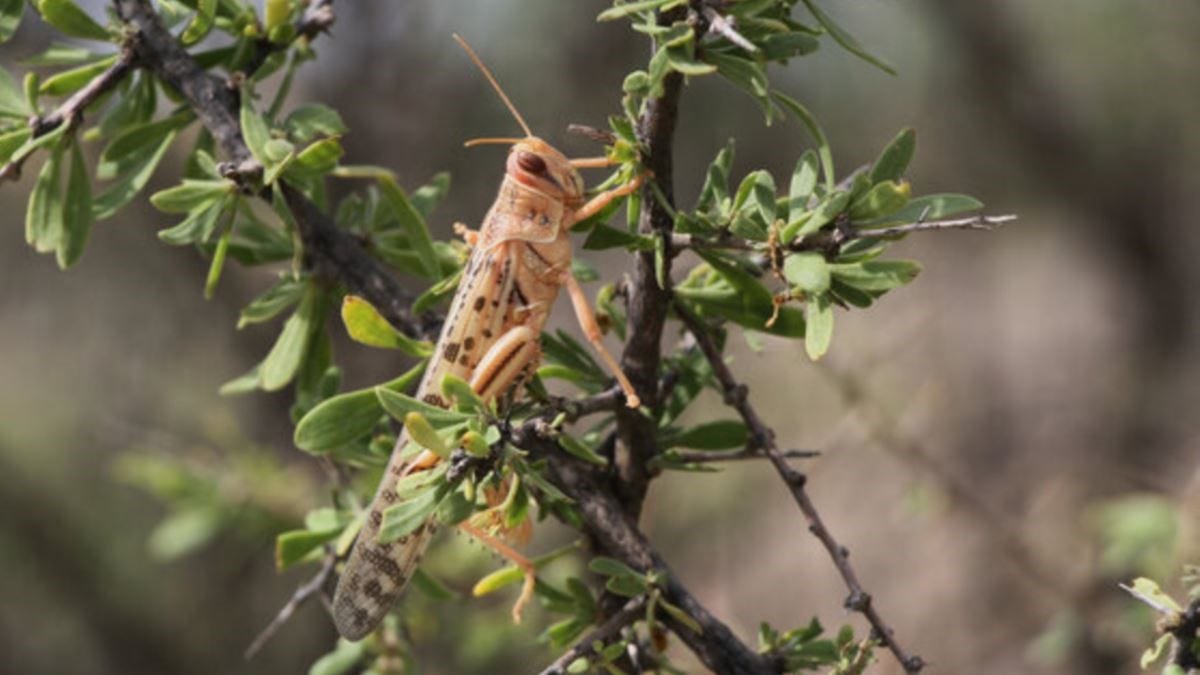
With desert locusts feasting on lush green vegetation over the last few months, there has been a significant drop in agricultural production. This in turn has led to widespread malnutrition and hunger which, instead of abating, is threatening to exacerbate further to the point of causing food insecurity. Currently, there are 13 million people spread across five East African countries facing a severe food shortage, but this number is likely to increase to 20 million if locust swarms continue to descend unhindered on crops and livestock.
Long-term Issue — What is truly worrying is that this appears to be a long-term problem which is not likely to go away any time soon. December 2019 was the first time that warning bells began to sound when swarms of desert locusts invaded Kenya and destroyed close to 200,000 acres of fields. That was the first indication that the situation was getting out of hand, and as the year has progressed, swarms have proliferated and continue to cause destruction.
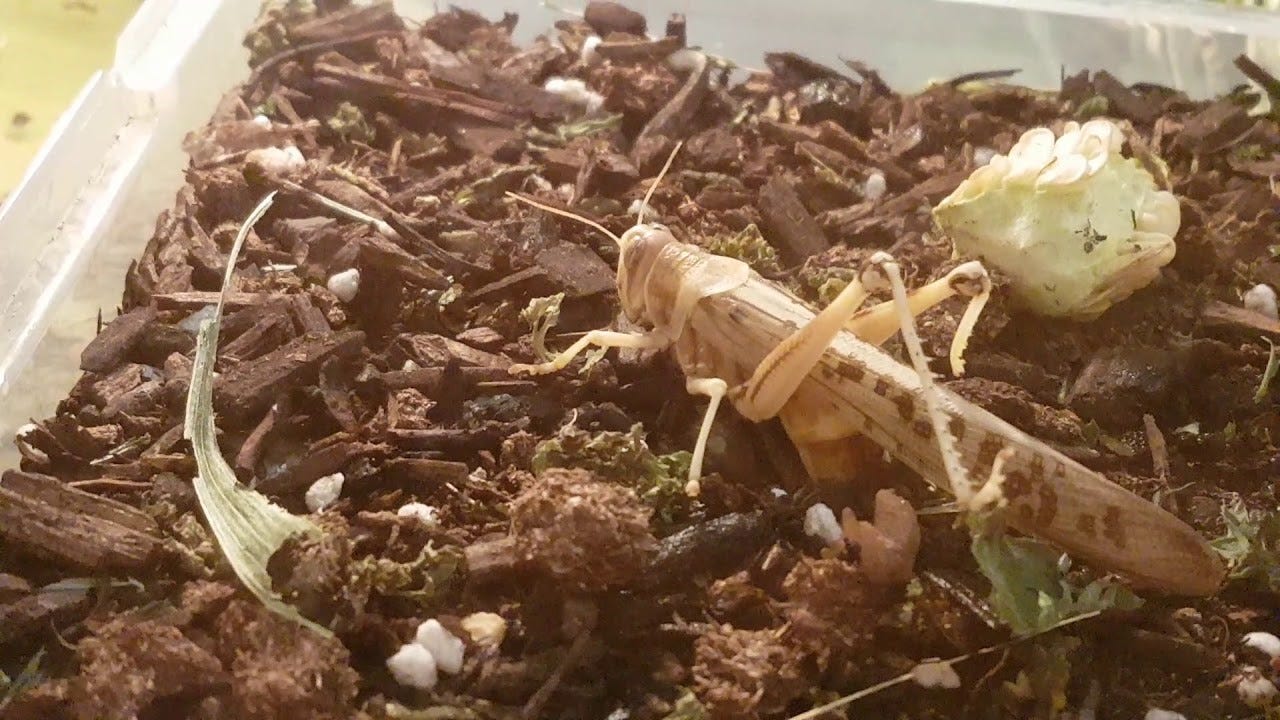
UN experts attribute this pest attack to climate change, which has caused more number of cyclones and heavy rainfall. Locusts thrive in wet climates, wherein they lay eggs in the damp soil. Such is their capacity to breed that they can lay as many as 1000 eggs in every square meter of the soil. Rainy season in the Horn of Africa lasts from October to December, and the spell in 2019 happened to be the wettest over the last few decades wherein the amount of rainfall exceeded the normal amount by almost four times. This provided the locusts with congenial conditions to lay large number of eggs deep into the soil. These continue to hatch into massive swarms even now, thus becoming a long-term disaster for the agricultural sector.
Farmers Unable to Cope — Traditional methods of coping up with pest attack in the Horn of Africa include whistling and shouting at the intruders, shaking a bottle full of pebbles, creating a loud din by banging on pots and pans, blowing bike and car horns and burning tires and trash. Unfortunately, aggressive that this strain of locusts have been, traditional methods have done little to deter swarms from descending on the crops. Worse still, they have been totally ineffective in stopping the insects from feasting on the harvest.
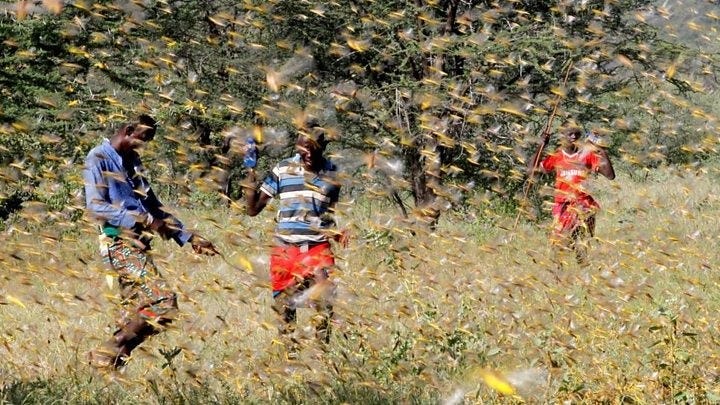
Left with no other alternative, farmers have been resorting to indiscriminate spraying of pesticides. However, contrary to solving the problem, this has further aggravated the situation since it has upset the natural biodiversity of the soil.
Impact on Wildlife — Africa is home to virtually every member of the food chain, all of which, along with Mother Erath form the fragile eco-system. As it happens, locust swarms — particularly if they are reminiscent of a medium-sized mobile dark grey cloud — have no place in this eco system. Therefore, when they do interject, the entire balance is disrupted with the result that the entire cycle is thrown out of gear.
If the locust invasion has pushed farmers to the brink of survival, it has also shaken up the conservationists. Swarms that arrived in Kenya from Ethiopia and Somalia left large tracts of empty grasslands in their wake, leaving naturalist to wonder if they would do the same going ahead. For several herbivores, like Grevy’s Zebra, African elephant, kudu and reticulated giraffe, it implies losing their natural habitats. With the herbivore population decimating due to barren grasslands, the carnivores would suffer and soon the entire eco system would collapse.
Combating Locust Attacks — Difficulties Involved
Given the magnitude of this emergency and its long-term implications, it is but natural for Africa’s insurance sector to step in and take appropriate steps to minimize damage. However, for insurance providers to make a difference, they must first understand the difficulties involved in combating locust attacks.
So far farmers, government bodies and concerned parties have not met with much success in stopping the locust juggernaut because –
· These are spread over extremely large areas, most of which are virtually inaccessible due to poor infrastructure like lack of roads, communication and so on;
· Presence of land mines in some areas of locust infestation;
· Limited resources for monitoring of locusts and also for controlling/combating their spread;
· Political and armed conflict between affected countries, which hinders coordination and concerted efforts;
· Difficulty in organizing operations for spraying pesticides and carrying them out so as to specifically target locusts;
· Inability to predict outbreaks, particularly in the face of uncertain weather conditions;
· Monetary hurdles in maintaining trained staff during periods marked with little/no locust activity;
So What Should Africa’s Insurance Sector Do?
In light of the ground-level realities, the onus is on Africa’s insurance sector to come up with solutions that would not just mitigate the uncertainties but also lay the groundwork for future progress. Some steps that can achieve this dual objective entail –
Providing Crop Insurance Policy — Purpose of a good crop insurance policy is to compensate the farmer for the loss of his crop incurred due to weather related problems, like cyclones, rain deficit and so on. Because these problems have a direct impact on crop yield and hence have a negative bearing on the income of the farmer, they are covered by the insurance providers.
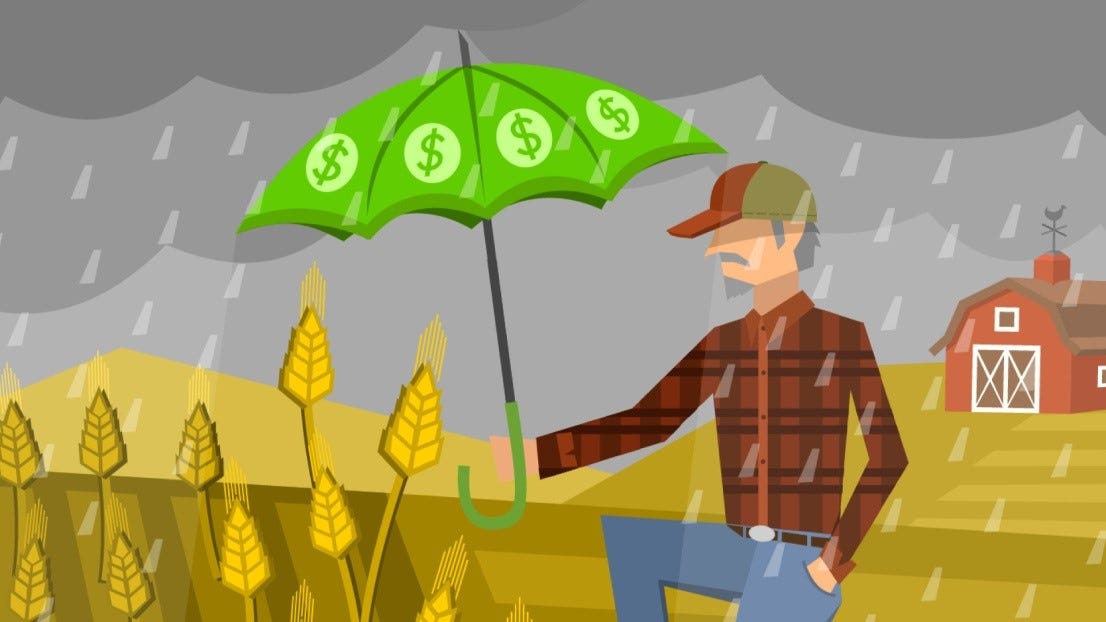
Africa’s insurance sector can improvise the terms of the crop insurance policy to include pest attack as one of the conditions for providing cover. This would provide the farmers with the much-needed assurance of receiving adequate compensation against loss of crops to locusts. In addition, it would also prevent them from resorting to drastic measures like indiscriminate spraying of pesticides and upsetting the biodiversity.
Sponsor Pesticide Management and Spraying — To get rid of locusts, most farmers in 2020 eventually ended up drenching their fields with strong pesticides. While it did work to some extent by temporarily warding off the locust swarms, there were negative side effects in terms of eliminating the good microbes which augment the fertility of the soil.
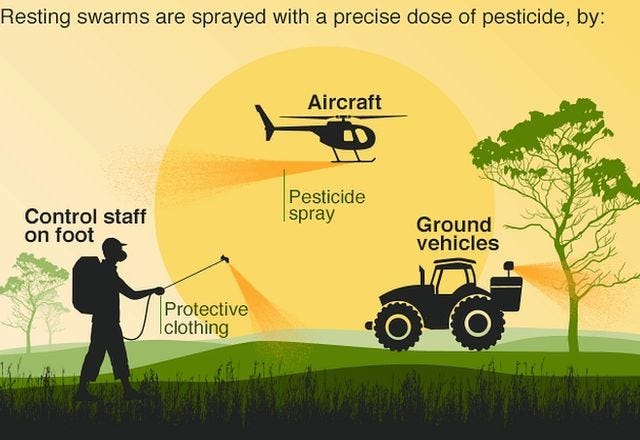
If insurance service providers sponsor pesticide management and spraying, the task will not just be better organized but will also be monitored well. Because it will be handled by experts, the choice of medicine will also judicious and preference would be given to organic products. Spraying will also be selective to the point of respecting the areas which may not have been ravaged by locusts.
Loan for Infrastructural Development — Infrastructure which set up to combat locust attacks should be of two types — preventive and post-outbreak. Preventive infrastructure comprises of early detection systems, like round-the-clock surveillance and monitoring locust related activity in the region. It also entails targeting locust nymphs so as to prevent them from attaining maturity and forming swarms. Post-outbreak infrastructure entails clearing out the waste and checking it for dormant locust eggs which might hatch later. Once the soil has been cleaned and checked, it can be prepared for cultivation.
Insurance providers can provide loans for both or either one of the phases, as preferred by the farmers. Doing so will serve to boost the morale of the farmer and provide him with the much needed moral support. It would also serve to establish a protocol for handling the problem of locust invasion.
Penetrate Rural Areas — Efficacy of an insurance provider in countering locust invasion lies in how well-known it is among the farmers in rural areas. All locust swarms require is a field of crops or livestock to feed on regardless of the setting. Due to the implication of this, farmers in rural areas are just as prone to losing their hard-earned income to pest invasion as their counterparts in urban areas. However, those living in or close to urban areas are within easy reach of insurance providers while the rural farmers tend to get overlooked.
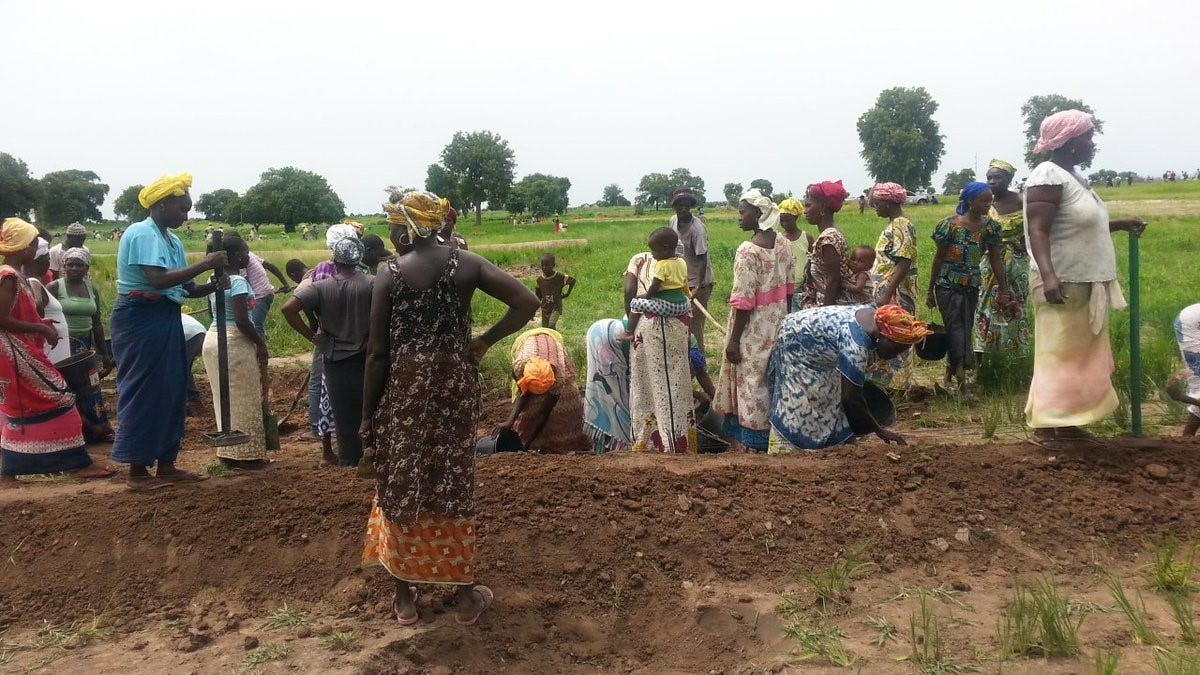
It is this rural-urban divide that needs to be bridged by the insurance providers if they are to effectively minimize the negative impact of locust invasion. Increasing penetration in rural areas is indeed the key to achieving this objective.
Final Thoughts
Locust invasion is a crisis which was neither foreseen nor predicted. As a result, it got out of hand before anyone could realize and caused massive damage, much to everyone’s dismay and chock. Eventually, the concerned parties did realize the gravity of the situation and have now got together to chalk out an effective control plan.
For Africa’s insurance sector, the situation entails exercising flexibility and thinking out of the box. Rather than sticking to traditional methods, providers can come up with new schemes that aid farmers during pest attacks and find ways to implement them. New situations call for creative thinking, and this is what should motivate insurance providers to come up with solutions to tackle locust invasions.
Related Posts

October 8, 2021
Fostering an Atmosphere of Certainty in Uncertain Circumstaces in Africa’s Insurance Sector
If there is one positive take-away from this dreary global health crisis, it is that…
October 8, 2021
How Africa’s Insurance Sector Can Negate Locust Attack
Over the decades, Africa’s insurance sector might have geared up to counter several natural and…

October 8, 2021
5 Ways Workforce Can Reshape Africa’s Insurance Sector Post COVID 19
Africa’s insurance industry, although just stepped out of its nascent phase, has responded well to…
